


Japan - A journey during the Cherry Blossom Season, a visit to Kyoto, and walking the Nakasendo Trail

Updated: Aug 18, 2025

In April, Kerry traveled to Japan, spending a few weeks touring during the Cherry Blossom Festival season. She shared her experiences throughout the trip.

We had a fabulous first day spent in Osaka. Walked for miles, ate yummy things, and had fun communicating with the locals. A waiter let us know he knew about the Haka and geysers in Rotorua. A lovely older gentleman on the street welcomed us to Japan, then asked where we were from. When I said New Zealand, he extended his arm long like a rifle and mimed a tear running down his cheek. “Very sorry,” he said. “Very sorry,” I agreed. We had fun mastering the underground, exploring Osaka Castle, Dotonbori, and the Kuramon Markets. We’re now off to Kyoto.

Kerry is first from Japan. We spent the afternoon of our first day in Kyoto at the Teramachi market. They sell pretty much everything, with food being a highlight. You can’t walk and eat, so even if you buy a snack, you are ushered to a tiny table in the back of the shop or need to stand to one side. There is just a constant surge of people. If you want to cross from one side to the other, you have to leap in ‘upstream’ and try to wash up on the other side! The quail egg stuffed octopus was delicious. We passed on the sparrow! A sake tasting and then a quick wander around Gion. A maze of tiny streets, low-rise timber buildings, and kimono-dressed gorgeous ladies. Fabulous!

Kerry’s Day 1 tour in Kyoto
There are 6 of us traveling together, and as we have limited time, we booked a private guide for our two days in Kyoto. This is a great option that enabled us to maximize our time. We have a van with a driver and a guide and set off at 8 a.m. until 2 p.m.
Kyoto used to be the capital of Japan until 1868 when it was moved to Tokyo. It’s Japan’s 7th largest city with 1.45 million people. The tallest building is a hotel 20 stories high, which caused great controversy when it was built. So, you can imagine how spread out the city is.

We visited Ginkakuji (Silver) Temple, Heian Shrine, and Daikokucho Temple. We attended a tea ceremony and had lunch at a vegetarian place that was part of a working monastery. The Japanese gardens at the temples are a work of art.

The end of March and early April is Sakura, cherry blossom time. The peak flowering lasts about 7 to 10 days. Picking the ‘right week’ is virtually impossible, with many predictions made based on climate, etc. We made a stop at the Imperial Palace gardens where some early trees are flowering. The palace was closed as the Emperor is in residence.

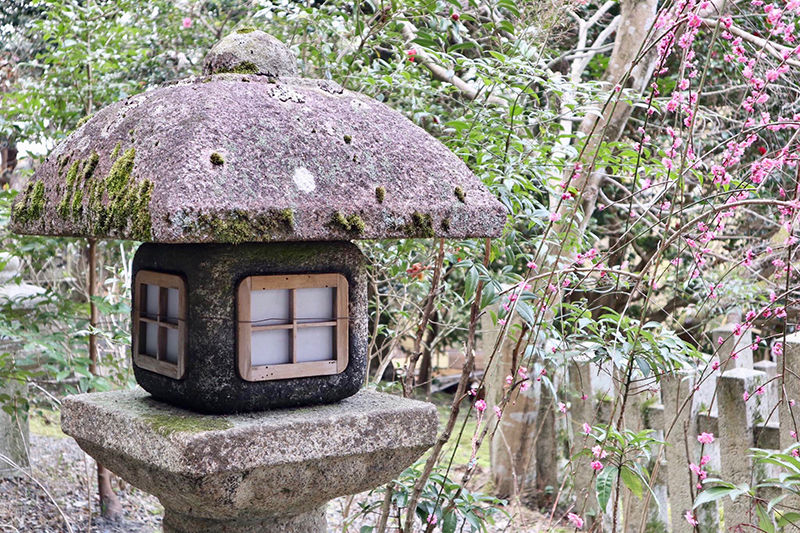
The Philosopher's Walk is a lovely footpath running alongside a canal and past shrines and residential properties. It is a beautiful walk lined with cherry trees. It was quiet on our visit, with the trees in full bud and some flowering. Spectacular for Hanami, blossom viewing, if you don’t mind crowds. We are perhaps 5 days too early.
Kerry’s Day 2 tour in Kyoto
We continued our private tour traveling on our “party bus,” local trains, and subway, and 24,257 steps - a big wonderful day! First stop, Nijo-jo Castle. While Osaka Castle has been rebuilt, Nijo-jo is the beautifully restored original and is a designated UNESCO World Heritage site. Built in 1603 as the Kyoto residence of the first Shogun of the Edo Period, you enter via the beautiful Karamon Gate. The wide floorboards move as you walk on them and make the sounds of birdsong and chatter. Known as Nightingale floors, this was so no one could sneak in! The noise does sound like birds and seems to come from the rafters rather than the floor. With thousands of visitors, it actually makes quite a racket!
Next stop, Kinkakuji or the Golden Temple. This was tragically burnt to the ground 50 years ago, so it has been rebuilt. Completely covered in gold leaf! The bonsai supported by the rack is over 600 years old.

A wait at a train station was a great kimono-spotting break before arriving at Arashiyama Bamboo Grove.

The Bamboo Grove is beautiful. Apparently, you want to visit on a day with a little wind so you can hear the bamboo clattering against each other. You would have needed a gale on the day we visited to beat the chatter of thousands of people.

Leaving Kyoto behind, we caught the Shinkansen bullet train (300 km an hour, 30 minutes) to Nagoya, where we met our guide for the next 5 days. Another 1-hour train ride, and we are in Ena.

Nakasendo Way
Formerly known as Oii, Ena is a station or post town on the historic Nakasendo Way. This highway ran between Edo (Tokyo) and Kyoto. We are spending 5 days walking and using trains in the most well-preserved part of this trail - the Kiso Way.
Ena is also famous for its woodblock printing, and we visited a museum and then had a hands-on experience. Very mixed results!

Our ryokan this evening is a 400-year-old inn. Futons on the floor and tatami mats. Our hostess is the 17th generation of the family to welcome guests here.

The shoe shuffle begins! Outdoor shoes off at the entrance. House shoes on inside, but off at the entrance to your room. House shoes on when you leave the room, but off at the bathroom, bathroom shoes on and then off as you leave and put on your house shoes... and repeat.

Our first onsen experience - a traditional Japanese bath. This one was private; tomorrow night is a shared onsen. Hmmmmm, that will be interesting!

We had the most amazing multi-course dinner. The food here is delicious, fresh, light, and healthy. Yum!!

After a short train and taxi ride, we were back on the Nakasendo walking path. This path was at its peak during the Edo Period (1603 to 1868) with 69 post towns from Edo (Tokyo) to Kyoto. The Kiso Road is the best-preserved part of this path that would once have been teeming with people. Commoners walked, nobles were carried by litter, and samurai traveled on horseback. At the entrance to every post town is a noticeboard with the rules and regulations and other points of interest.

The path today was mainly moss-covered cobblestones and forest tracks. Cedar, maples, and cherry trees allow for a colorful display in autumn and spring. We walked alongside streams, waterfalls, and through the lovely post town of Magome. We heard deer whistle; there are also wild boar and bears, so the sound of the bear bell is a regular noise. Villages also have their own ‘tune’. So now and again, loudspeakers boom out. Our guide's hometown plays "Edelweiss" twice a day—he has no idea why that particular tune!
We walked 13 km and ended the day with beer at a 300-year-old tea house and a public women-only Japanese bathhouse experience. A great experience and way to ease the muscles at the end of the day.

Our accommodation is a 300-year-old inn. It is very authentic and has had minimal modernizing. Our rice paper walls slide open to a balcony overlooking the street. Another fabulous dinner, and we are all ready for bed by 9 p.m.

Our gorgeous inn at O-Tsumago. The town is arguably the most attractive of all post towns in Japan. We visited Okuya, the Waki-honjin of this town. This was one of the most important inns in each post town, designated as the resting place for the nobles.

We then continued our walk through fields and small villages before catching a train and a taxi to commence our afternoon walk.
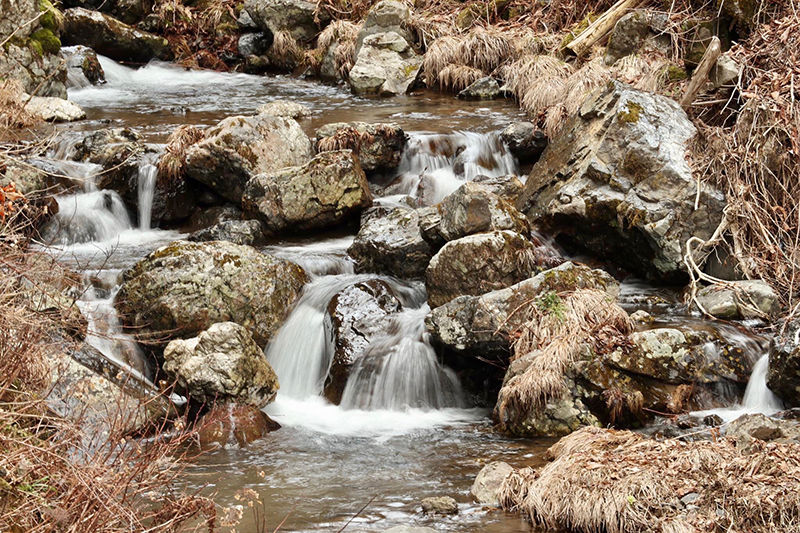
Waterfalls, mountain passes with a backdrop of Mt. Ontake, an active volcano considered sacred by a Buddhist sect. Then onto a plateau, Kaida Kogen, known for its Kaida horses used for farming and as pack animals on the trail.

Walking today was at a higher altitude, so there was a distinct alpine feel, and even snow and ice in some shady spots.

The hotel Onsen was a real treat again after a long walk, followed by yet another delicious multi-course dinner. This was our gorgeous inn at O-Tsumago and some other images from the town, arguably the most attractive of all post towns in Japan.
We visited Okuya, the Waki-honjin of this town. This was one of the most important inns in each post town, designated as the resting place for the nobles.

We took a 10-minute train Kiso-Fukushima and then began our ascent of the Torii Toge. The pass is named after the Shinto Torii, or gate, found here. One of four that surround the sacred Mt. Ontake. The shrine was difficult to access at the peak, so 500 years ago it was moved to the base.
The track zigzagged straight up to 1197m, the second highest point on the Nakasendo, and marks the leaving of the Kiso Valley and entering Narai. More cobbles, forest, and snow on the paths.
Narai post town is another gorgeous timbered town, but it was almost deserted in the light rain, so after a quick wander around, we boarded a train for the 1-hour journey to our last stop, Matsumoto.

Our tour finished this morning after visiting Matsumoto Castle. This is well worth a visit. Beautiful. Stairways that get steeper and narrower the higher you go until they are almost ladders. A great defense strategy if anyone managed to get past the moats and walls and get into the castle. Simply no room to swing a sword around and single file only.

There is a great art museum in Matsumoto, but sadly we did not have time to visit as we had a train to catch.
A very scenic trip to Tokyo. It was snowing at one stage, so it was nice to have finished our walk as it may not have been pleasant in the mountains. Views of Mt. Fuji on the right side of the train; we were seated on the left, so only managed one photo as we hurtled along.

We are staying in the Ginza area and managed to find our way by subway with the aid of a very helpful gentleman at the train station. The people here are so friendly and helpful, and many signs and train announcements are also in English.
A lovely dinner in a very small quirky restaurant and looking forward to exploring Tokyo in the morning. Kerry’s final report from Japan. The first stop on our whirlwind 2 days in Tokyo was Nihonbashi, literally meaning Japan Bridge. The ugly highway runs over the river as that was the only access available. Consent has just been given to remove the highway and run it under the river. The land to the left is the original water’s edge, the land on the right is reclaimed. The plaque in the centre of the road is ‘point zero’. The spot from which all distances are measured in Japan. All major roads once led here, including the Nakasendo. We arrived in Tokyo for peak cherry blossom time. Just beautiful and hard to believe this lasts about a week and then virtually all will fall. We had Hanami, cherry blossom viewing in Ueno Park. It’s traditional for the Japanese to picnic under the cherry trees. Designated areas are marked, and notices advise not to touch the trees and that you cannot reserve your place. Any unattended picnic rugs will be removed. Even Asahi has a cherry blossom beer! There is also a shrine for 5 of the Tokugawa Shoguns. There were 13 Shoguns in total before power was handed to the Emperor.

Kerry’s final farewell to Japan. Senso-ji is the oldest temple in Tokyo, founded by fishermen who pulled a golden statue out of the nearby Sumida River. A man who made glasses was advised to contribute to ensure the success of his business, now Canon.
We also visited Yanaka, a winding area of narrow streets and the best example of old prewar Tokyo. Seventy-five percent of the city was destroyed in just one night with the loss of over 100,000 lives. The city burned.
We walked through a cemetery and down nearby streets for even more beautiful blossoms.

Japan, you have been incredible. We absolutely loved every aspect of our journey.
If you're planning a visit to this fantastic country, I'm here to assist you. Feel free to express your interest in traveling to Japan by commenting on this post or sending me a message. Id be delighted to hear from you.


Comments